4K Laptop Screens: Everything You Need to Know (2026 Buying Guide)
The screen on a modern laptop or desktop setup is your primary window into every document, creative project, and gaming world. In recent years, 4K resolution (3840×2160 pixels) has moved from luxury televisions to laptops and external displays. But does an ultra-high-definition screen actually make sense on a mobile computer, or does an external portable monitor offer a far smarter upgrade? Here is everything you need to know in 2026.

4K Resolution Explained: Pixel Density vs. Real World Utility
A 4K display packs 8.29 million individual pixels—four times the density of standard 1080P Full HD (2.07 million pixels). On a 14-inch to 16-inch laptop screen, this creates an extraordinarily high pixel density (over 280 PPI). However, human eyes sitting at normal viewing distances (18 to 24 inches) cannot distinguish individual pixels beyond ~160 PPI.
To prevent text and icons from appearing microscopically small, operating systems like Windows 11 and macOS apply 200% to 250% desktop display scaling. As a result, you often end up viewing the exact same amount of interface workspace as a crisp 1080P or 1200P screen, but at a massive cost in battery consumption and system heat.
Pros and Cons of Built-In 4K Laptop Screens
The Smarter Workflow: Pairing a Portable Secondary Screen
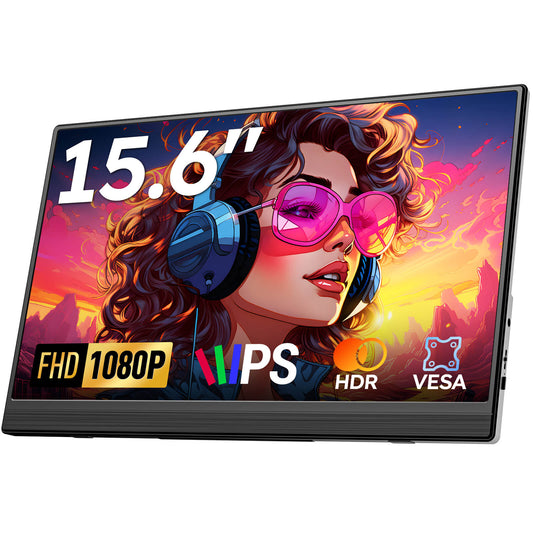
Rather than paying exorbitant premiums for a built-in 4K laptop screen that quickly drains your battery, pairing an energy-efficient 1080P or 1200P external screen like the Favpista 15.6" FHD Portable Monitor delivers far superior multitasking productivity. You can reference research, keep communication channels open, and code simultaneously across two physical panels.
Recommended Favpista Displays
- Favpista 15.6" FHD 1080P Plug & Play Portable Monitor: The ultimate mobile display with dual USB-C, Mini HDMI, and folding smart cover.
- Favpista 14.1" 16:10 FHD 1200P Triple Screen Extender: Complete 3-screen laptop expansion for power multitaskers.
- Favpista 14.1" Touchscreen Lapdock with 10800mAh Battery: Complete mobile setup with built-in battery, keyboard, and touchscreen.
- Browse All Favpista Portable Displays: Explore our full collection of lightweight external monitors.
FAQ
Q:Is a 4K screen worth it on a 15-inch laptop?
For most users, no. Due to OS scaling, a 15-inch 4K screen renders interface elements at 1080P size anyway while consuming substantial additional battery power and generating extra heat.
Q:How much battery does a 4K screen consume compared to 1080P?
A 4K display draws 12W to 16W, cutting laptop battery endurance by 30% to 45% compared to an energy-efficient 1080P IPS panel that draws only 5W to 7W.
Q:Can gaming laptops run modern games smoothly at 4K?
Only high-end gaming laptops with mobile RTX 4080/4090 GPUs can drive modern AAA titles at 4K. 1080P displays offer far higher frame rates and longer battery runtime.
Q:What is the main advantage of adding a second portable monitor?
Adding a second monitor doubles your usable workspace, reducing window-switching by up to 35% and boosting multitasking efficiency for coding, writing, and research.
Q:Do Favpista monitors work with MacBooks and Windows PCs?
Yes. Favpista monitors feature plug-and-play USB-C and Mini-HDMI connectivity compatible with Windows 11, macOS, ChromeOS, iPadOS, and gaming consoles.