What is sRGB Used For? Color Gamut Guide for Portable Monitors (2026)
When shopping for a laptop, tablet, or portable monitor, display specifications often highlight metrics like 99% sRGB, 100% sRGB, or 45% NTSC. But what does sRGB actually mean, why is it considered the universal color benchmark of the internet, and how does it impact your daily visual experience?
Created collaboratively by Microsoft and HP in 1996, sRGB (Standard Red Green Blue) is the global default color space for the web, digital imaging, and computing peripherals. In this 2026 display color guide, we explore how sRGB works, why color coverage matters for portable monitors, and how it compares to Adobe RGB and DCI-P3.

What is sRGB?
In digital displays, a color space defines the specific range (gamut) of colors a monitor is capable of reproducing. Before sRGB's introduction in the mid-1990s, different monitors and operating systems interpreted RGB values inconsistently, resulting in colors looking vibrant on one screen and muddy or washed out on another.
By standardizing color coordinates, gamma curves (2.2), and a reference white point (D65, 6500K daylight), sRGB ensured that a photo, website layout, or streaming video looks virtually identical whether viewed on a Windows laptop, MacBook, Android phone, or external portable monitor.
Color Gamut Comparison: sRGB vs. DCI-P3 vs. Adobe RGB
Why Does sRGB Matter on a Portable Monitor?
- Accurate Color Without Oversaturation: High sRGB coverage (95%–100%) ensures that skin tones, product photos, and branding graphics render exactly as their creators intended.
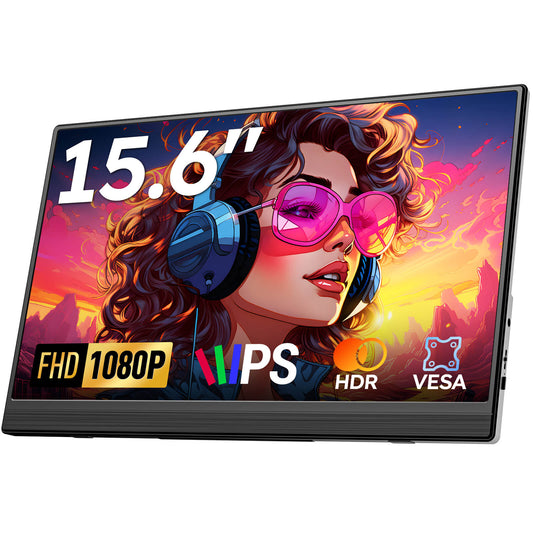
- Avoid the "45% NTSC" Trap: Budget portable monitors often cut costs by using low-end TN panels covering only 45% NTSC (~60% sRGB). On these screens, reds appear orange and blues look dull and faded. Premium displays like the Favpista 15.6" FHD Portable Monitor use Grade-A IPS panels delivering rich, lifelike sRGB reproduction.
- Seamless Multi-Screen Color Matching: When using an external monitor alongside your laptop, matching color gamuts prevents distracting color shifts when moving windows across screens.
Recommended Favpista Color-Accurate Displays
- Favpista 15.6" FHD 1080P Plug & Play Portable Monitor: Premium Grade-A IPS panel with vibrant sRGB color accuracy, 178° viewing angles, and anti-glare finish.
- Favpista 14.1" 16:10 FHD 1200P Triple Screen Extender: Dual-screen laptop extender with 16:10 vertical productivity aspect ratio.
- Favpista 14.1" Touchscreen Lapdock with 10800mAh Battery: Complete mobile setup with built-in battery, keyboard, and touchscreen.
- Browse All Favpista Portable Displays: Explore our full collection of lightweight, travel-friendly external monitors.
FAQ
Q:What is considered good sRGB coverage for a portable monitor?
For everyday office work, document editing, and gaming, 90% to 100% sRGB coverage is ideal. Avoid displays rated below 72% NTSC (roughly 99% sRGB), as lower coverage yields washed-out colors.
Q:Is sRGB or DCI-P3 better for gaming?
Because almost all modern PC and console games are mastered in standard sRGB, 100% sRGB displays reproduce games with natural, accurate colors. DCI-P3 displays provide extra saturation in HDR-enabled titles.
Q:Why do colors look different between my laptop and portable monitor?
Differences in color temperature (6500K warm vs. 9300K cool), panel backlight technology, or mismatched color gamuts cause variation. Calibrating both screens to standard 6500K sRGB ensures visual consistency.
Q:Does sRGB cover HDR content?
No. High Dynamic Range (HDR) video utilizes the wider DCI-P3 or BT.2020 color spaces. However, sRGB monitors can tone-map HDR signals down to standard dynamic range for clear viewing.
Q:What is the difference between sRGB and RGB?
RGB is an abstract color model that mixes Red, Green, and Blue light. sRGB is an exact, mathematically defined color space with specific standardized chromaticity coordinates and gamma curves.